You Already Know
The issue had been on their list for two years. Everyone in the room knew the answer.
We were in a hotel conference room overlooking the water. Outside, a boat was bobbing peacefully on the horizon.
This team had nearly doubled the business in two years. They had made dozens of key people, process and system decisions along the way. This one kept coming back.
Eight Quarters on the Issues List
Three direct reports were in the wrong seats. Everyone acknowledged it. It had come up every quarter for eight quarters.
The risks were real: knowledge transfer, code only these people understood, and customers, money and contacts that could walk out the door. Every quarter the risk of moving grew. So did the cost of waiting: missed delivery targets and a team corroding from the inside. Coaching hadn't fixed it. The call belonged to the owners now.
The heads of revenue operations, engineering and product each walked through what it was costing them. We had heard it before.
Fire Me or Fire Them
I asked, “What's the decision?” Nobody answered.
So I asked it another way. “Would it be crazy to make the hard decision now?”
Still nothing.
I went to the issues list and wrote two lines.
Fire Eliot.
Fire them.
I smiled. “This feels like decision time. You can fire me, because I'm not doing my job if I don't push you here. Or you can fire them.”
They looked at each other. Laughed knowingly. Then the floodgates opened.
They started talking about what the decision would actually look like. Contingency plans. Action plans. It wouldn't be easy, and it would take six months. But there was a roadmap.
The decision was made.
Three months later, the first change is done. They handled it well. The leadership team is relieved, and the broader team is excited about where things are heading.
Just Talking About It Is a Decision
Most leadership teams carry one big problem they aren't moving on fast enough. A person who isn't working out. A vendor who keeps missing the mark. A strategy that has stopped fitting the business.
These are good teams. They care about getting it right. The decision is usually simple. Carrying it out is hard and unpleasant. So they talk about it, quarter after quarter.
Talking about it and not deciding is a decision.
Eight quarters of talk was the team implicitly deciding to live with it.
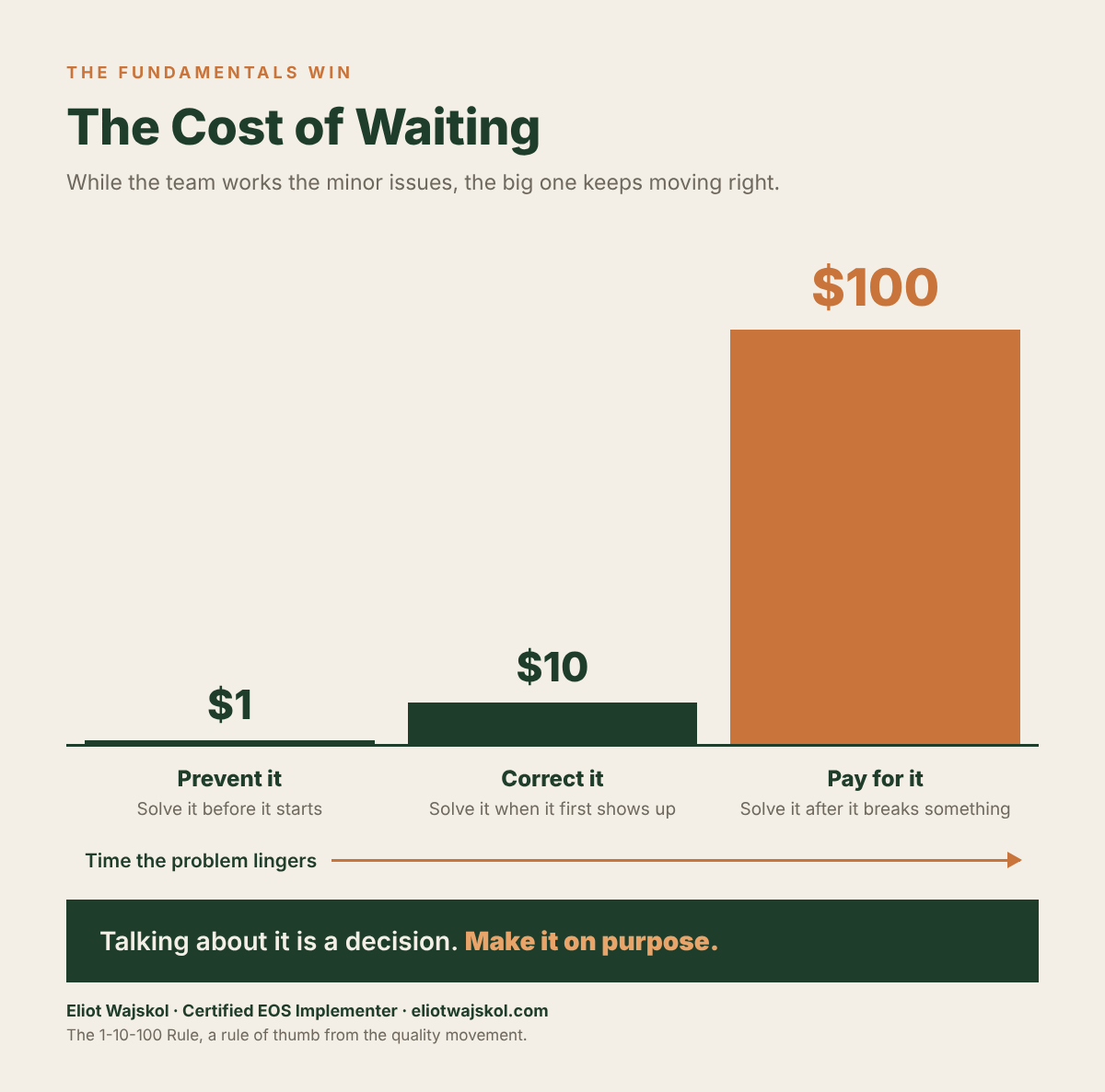
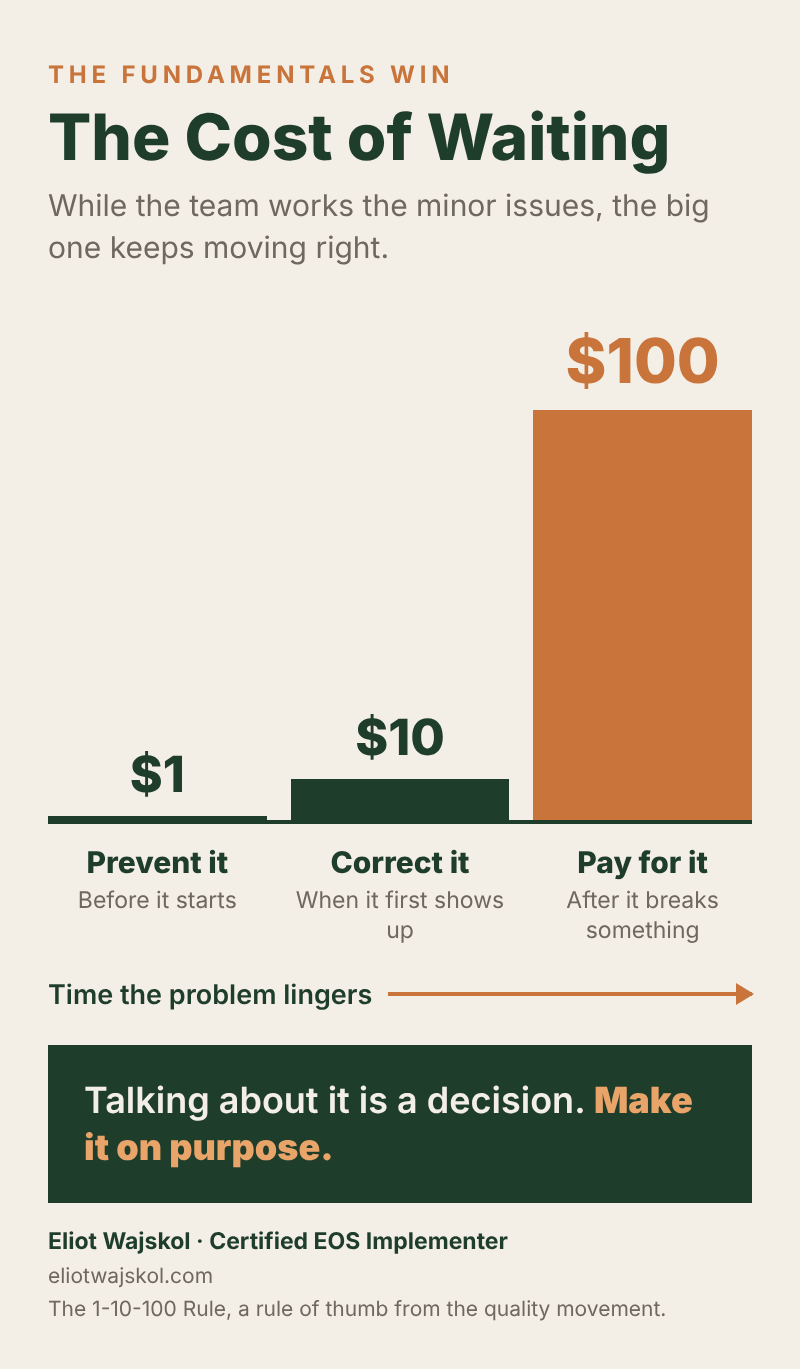
Every hard issue has three honest choices: live with it, end it, or change it. Living with it can be the right call. But if that's your choice, make it on purpose, and stop spending meetings on it.
Making the hard call is one of the fundamentals. Like any fundamental, it takes reps.
I spent 30 years building companies. Two of them went on to successful exits. I've led more than 350 sessions with leadership teams. I've waited too long on hard calls of my own. I know how reasonable the waiting feels from the owner's chair.
That's why I'll put my own seat on the line. Most teams have the answer. They need someone to hold them there long enough to uncover it and decide.
Where to Start
Try it in your next leadership meeting.
Ask the question. “What's the decision?” Then wait.
Choose out loud. Live with it, end it, or change it.
Give it a name and a date. A decision without both is still a conversation.
Three questions:
Which issue has been on your list for more than two quarters?
Who in the room already knows the answer?
What are you deciding by not deciding?
You already know the answer. Say it out loud.
The fundamentals win.